What is herringbone flooring?
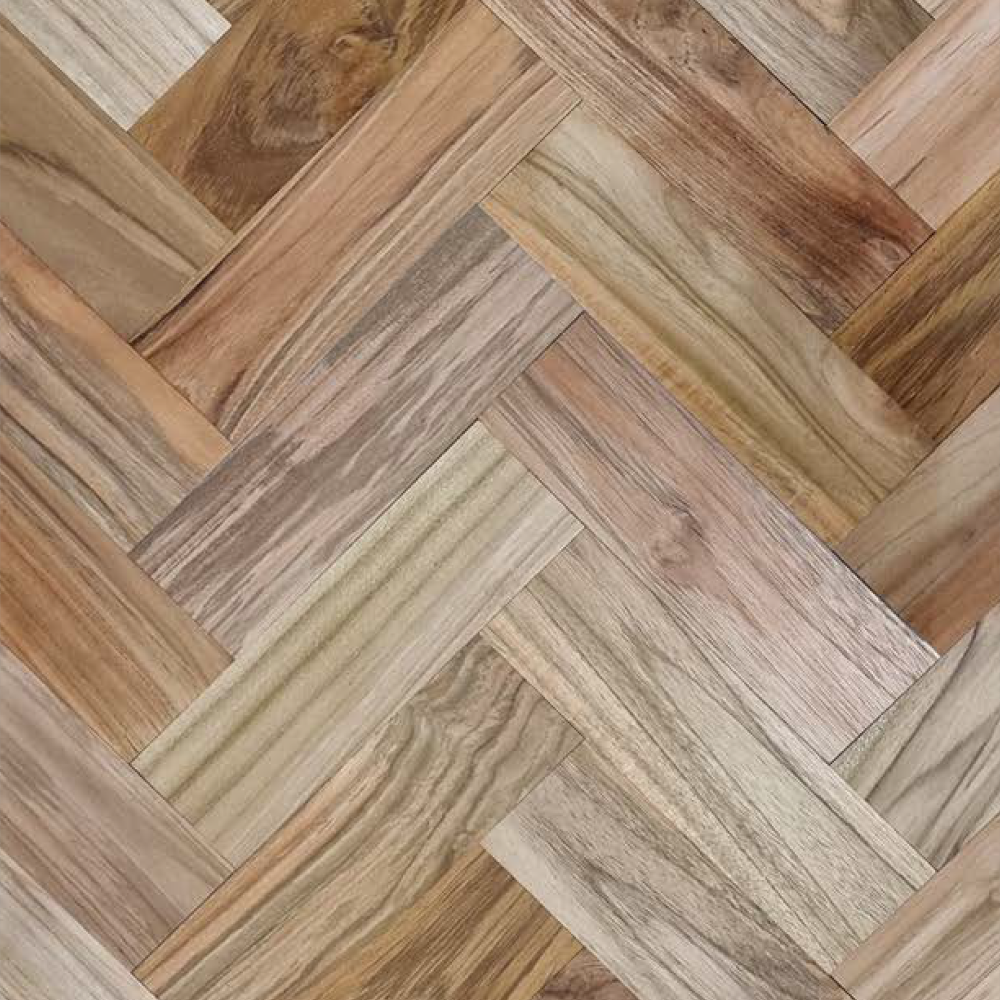
Herringbone flooring is a parquet pattern made by laying rectangular planks or tiles in a staggered zig-zag formation. Each plank meets the next at a right angle, creating the distinctive “V” effect associated with classic European flooring.
Originally found in heritage properties and formal interiors, herringbone flooring is now widely used in modern homes, where it brings a sense of craftsmanship and subtle luxury.
- Creates a more decorative finish than straight plank flooring
- Works in wood, luxury vinyl, rigid core and tile formats
- Pairs well with both minimalist and classic interior design styles
Herringbone flooring is ideal for homeowners who want a more elegant and design-focused floor without losing practicality.
Why is herringbone flooring trending?
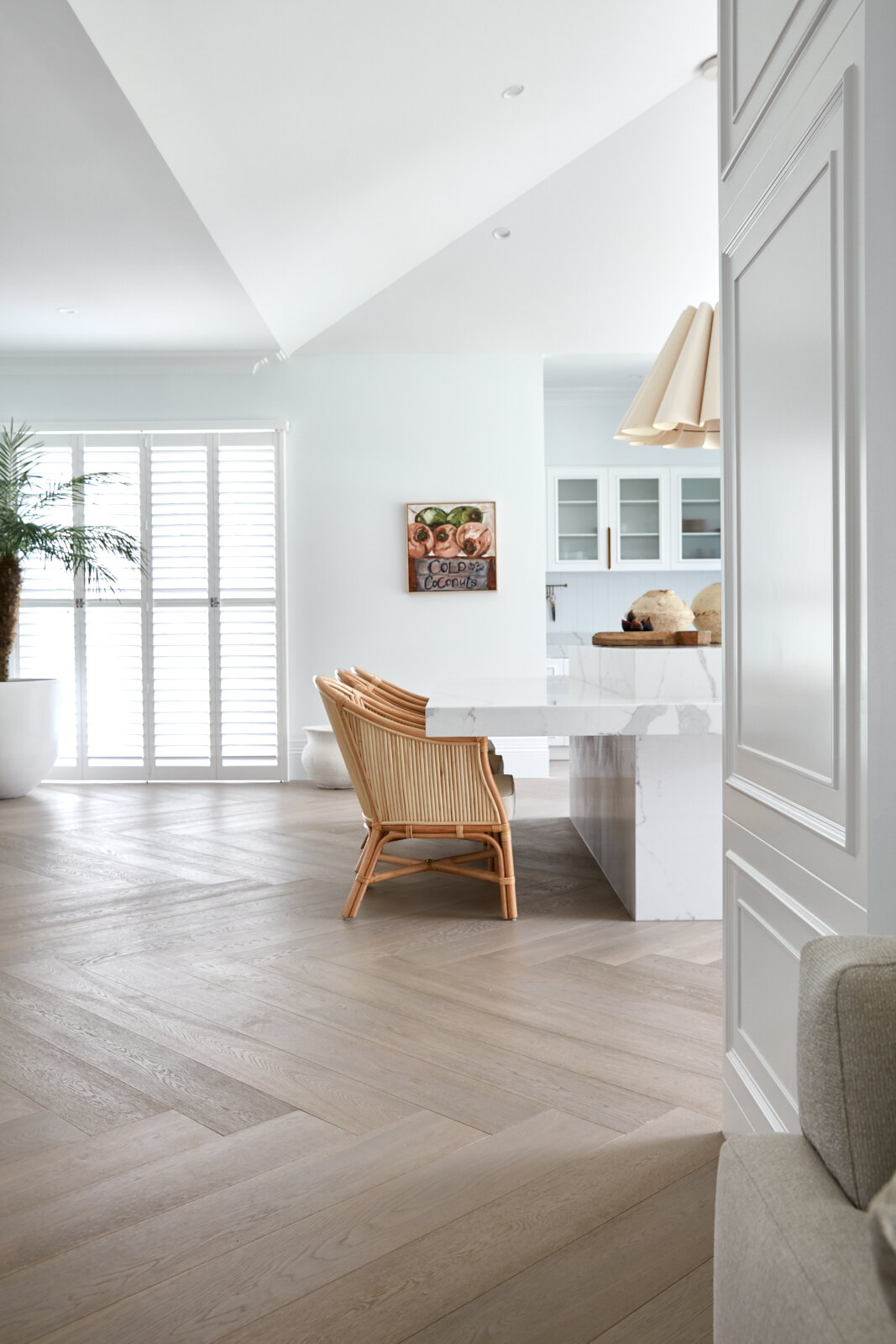
Herringbone flooring continues to trend because it offers a balance of timeless style and strong practical performance. It gives rooms visual movement without feeling busy and can make interiors feel more premium.
With the rise of engineered wood herringbone, waterproof LVT herringbone and rigid SPC herringbone, the design is now more accessible across different budgets and room types.
- Popular in living rooms, hallways and open-plan homes
- Available in natural oak, beige, greige and smoked tones
- Suitable for both classic and contemporary interiors
- Helps create a stronger design statement than standard plank flooring
Best herringbone flooring materials explained
The best herringbone flooring material depends on where you want to install it, how much maintenance you want, and whether you prioritise authenticity, water resistance or value.
Engineered wood herringbone flooring
Engineered wood herringbone is ideal if you want the look and feel of real wood with greater stability than solid parquet. It is one of the most premium choices for lounges, dining rooms and bedrooms.
- Real wood surface with natural grain and character
- More stable than solid wood flooring
- Often suitable for underfloor heating, depending on product specification
- Excellent for timeless, premium interiors
LVT herringbone flooring
LVT herringbone flooring offers a wood-look parquet design with strong everyday practicality. It is a popular choice for busy households because it is durable, comfortable underfoot and easy to maintain.
- Water-resistant and family-friendly
- Available in a wide range of wood-effect finishes
- Good option for kitchens, hallways and open-plan spaces
SPC herringbone flooring
SPC herringbone flooring features a rigid core construction that delivers extra stability and dent resistance. It is especially useful in high-traffic areas and modern homes where performance matters.
- Highly durable and stable
- Suitable for everyday wear in busy interiors
- Often installed with convenient click systems
Porcelain herringbone tiles
Porcelain herringbone tiles are best for bathrooms, utility rooms and other wet areas where full water resistance and low maintenance are essential.
- Fully waterproof
- Excellent for bathrooms and entrances
- Very hard-wearing and low maintenance
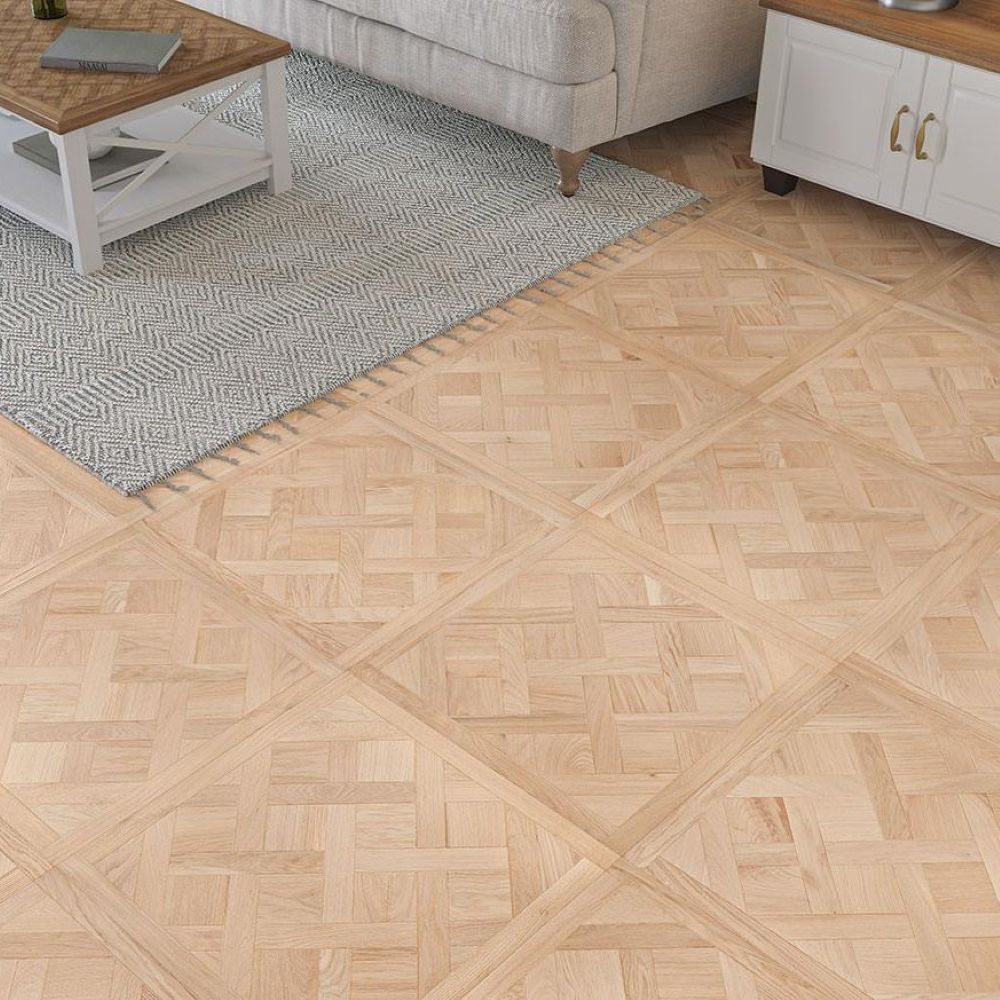
Pros and cons of herringbone flooring
Like any premium flooring style, herringbone flooring has clear advantages and a few important considerations.
Advantages of herringbone flooring
- Elegant, timeless and design-led appearance
- Creates more visual interest than straight plank floors
- Available in materials for different budgets and lifestyles
- Works in both small rooms and large open-plan interiors
Things to consider before choosing herringbone
- Installation is more complex than standard straight planks
- Labour costs are often higher because of the pattern layout
- Professional fitting is strongly recommended for the best finish
- Product and installation choices should match the room's needs
Where does herringbone flooring work best?
Herringbone flooring can be used throughout the home, but it is especially effective in areas where you want the floor to become part of the design statement.
- Living rooms: ideal for a warm, elegant and welcoming focal point
- Hallways: makes a strong first impression from the moment you enter
- Dining rooms: adds structure and movement beneath tables and chairs
- Bedrooms: softer tones create a calm, boutique-hotel feel
- Kitchens: LVT, SPC or suitable engineered wood can combine design and practicality
Many homeowners use herringbone in key impact areas and choose simpler plank flooring in secondary rooms.

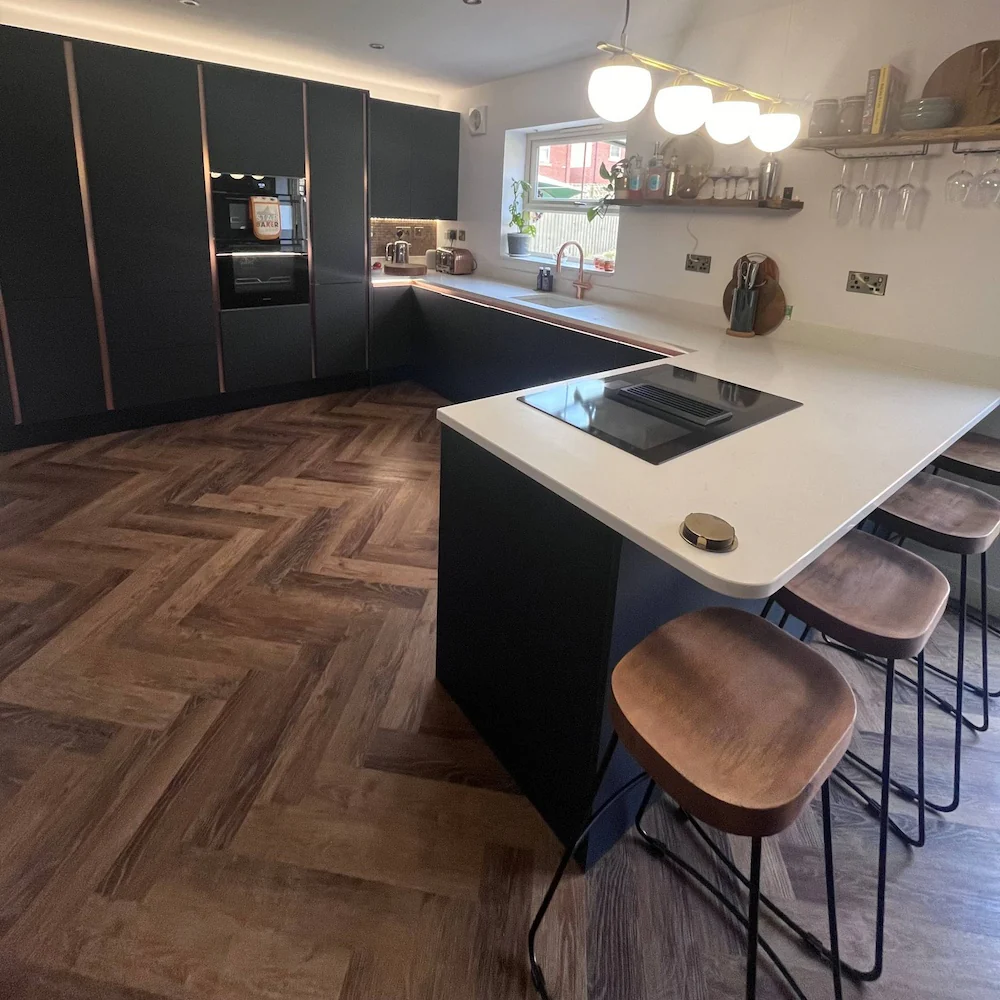
Herringbone flooring installation tips
Herringbone flooring installation requires planning, precision and an accurate layout to achieve a premium finish.
- Plan the layout direction: align the pattern with the room shape or natural light where possible
- Start from a centre line: this helps balance cuts and pattern flow
- Prepare the subfloor properly: an uneven base can affect the final result
- Use experienced fitters: herringbone mistakes are more visible than standard plank errors
Best colours, finishes and maintenance advice
Popular herringbone flooring colours include natural oak, beige, greige, smoked brown and soft whitewashed tones. These shades keep the parquet pattern calm, timeless and versatile.
Most popular herringbone tones
Light oak and beige shades are ideal for Scandinavian-inspired interiors, while mid-brown and smoked finishes suit richer and more traditional spaces.
Engineered wood maintenance
Sweep or vacuum regularly, use a pH-neutral cleaner, avoid standing water and protect the surface with felt pads.
LVT, SPC and porcelain maintenance
Regular sweeping and damp mopping is usually enough. Always follow the specific manufacturer guidance for your product.
How much does herringbone flooring cost?
Herringbone flooring costs vary depending on the material, thickness, finish, installation method and subfloor preparation. As a general rule, herringbone usually costs more to fit than straight plank flooring because the layout is more complex.
| Material | Typical product price (per m²) | Installation guidance |
|---|---|---|
| Engineered wood herringbone | Approx. £40–£90/m² | Higher fitting cost due to precision layout and cutting |
| LVT herringbone | Approx. £20–£45/m² | Medium installation cost depending on system and preparation |
| SPC herringbone | Approx. £25–£50/m² | Medium, often easier with click installation systems |
| Porcelain herringbone tiles | Approx. £30–£70/m² | Higher labour cost because careful tiling is needed |
Final costs depend on room shape, subfloor condition, waste allowance, product quality and local installation rates.
Frequently asked questions about herringbone flooring
Is herringbone flooring more expensive than straight plank flooring?
Yes, in most cases herringbone flooring costs more to install because the pattern requires more planning, cutting and labour.
Is herringbone flooring a good idea for small rooms?
Yes, herringbone flooring can work very well in small rooms because it adds character and directional movement, especially when paired with lighter tones.
What is the best material for herringbone flooring in kitchens?
LVT herringbone and SPC herringbone are popular choices for kitchens because they combine the parquet look with strong practicality and water resistance.
Can herringbone flooring work with underfloor heating?
Many engineered wood, LVT and SPC herringbone products can be suitable for underfloor heating, but you should always check the exact product specification first.